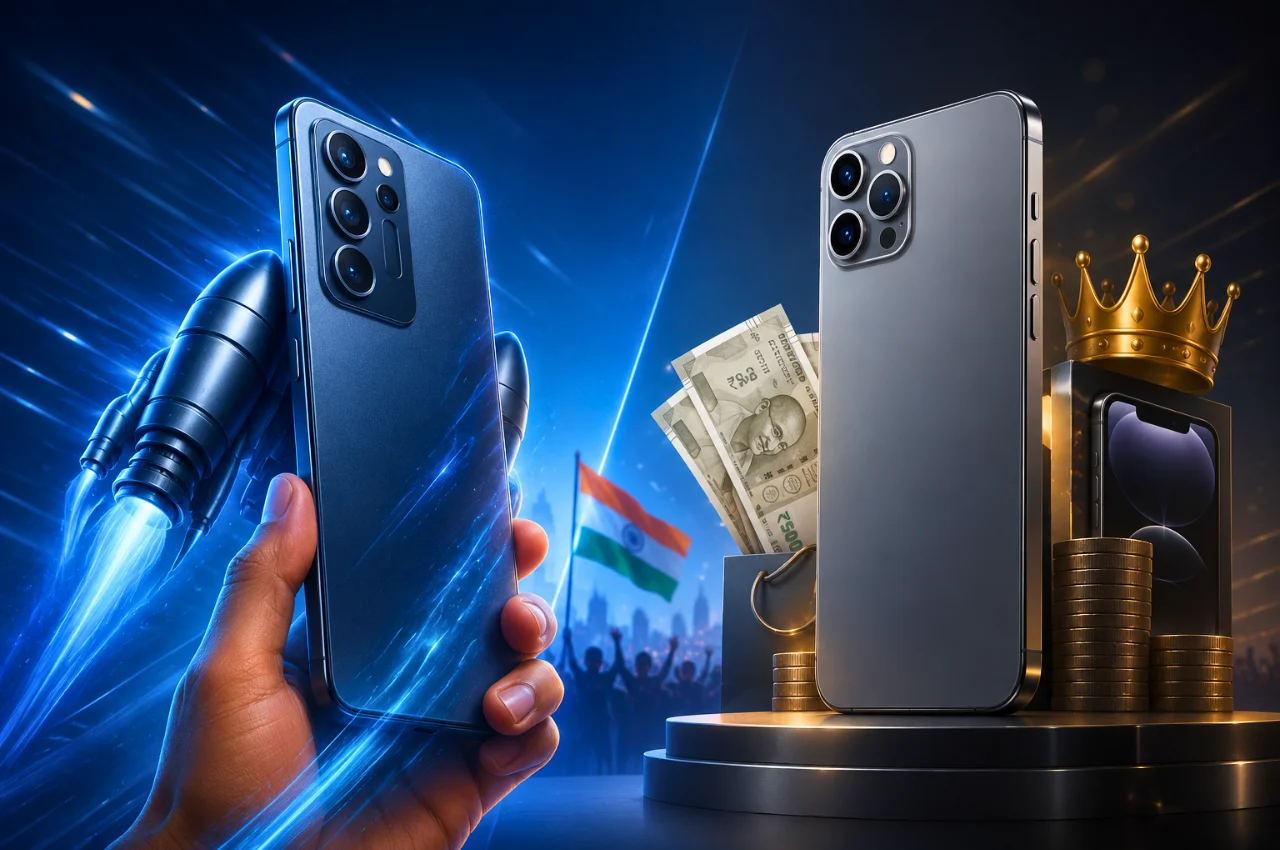
Spend ₹1,20,000 on a Samsung Galaxy S25 Ultra. Or spend ₹35,000 on an iQOO Neo 10 and get ninety percent of the same experience for less than a third of the price.
That is not an exaggeration. It is the reality of the Indian smartphone market in 2026 — and it is precisely why the ₹25,000 to ₹60,000 price segment has become the most competitive and most talked-about category in Indian smartphones this year.
Flipkart and Counterpoint Research’s Smartphone Insights Report 2026 identifies the flagship killer segment as the primary driver of market value growth in India — the category where the most interesting buying decisions are happening, where brands are competing most aggressively, and where Indian consumers are finding the best balance of performance and value.
This guide explains what a flagship killer phone actually is, why this category has become so powerful in 2026, which phones are genuinely worth considering at different price points, and how to decide whether a flagship killer is right for you or whether you actually need a true flagship.
What is a Flagship Killer Phone?
A flagship killer is a smartphone that delivers performance, features, and an experience comparable to a premium flagship phone — typically priced above ₹80,000 — but at significantly lower price, usually between ₹20,000 and ₹60,000.
The name is deliberately provocative. The idea is that these phones do not just compete with flagships — they make the higher price of flagships difficult to justify for most buyers.
The term originated with OnePlus in 2014, when the company launched the OnePlus One with the slogan “Never Settle” — a phone with flagship-level specifications sold at roughly a third of the flagship price, achieved by cutting margins, selling directly online, and eliminating retailer markups. The concept resonated with Indian buyers immediately, and the category it created has become the most hotly contested segment in the country’s smartphone market.
In 2026, flagship killers have evolved significantly. The gap between a flagship killer and a true flagship has narrowed to the point where for most everyday users — even demanding ones — the difference is genuinely difficult to notice in daily use. A flagship killer today typically offers a top-tier or near-top-tier processor, an AMOLED display with high refresh rate, a capable camera system with optical image stabilization, a large battery with fast charging, and multiple years of software updates. These were all luxury specifications five years ago. Today they are standard in the ₹30,000 to ₹50,000 range.
Why the Flagship Killer Segment is Winning in India in 2026
Several factors have converged to make 2026 the best year ever for flagship killer phones in India — and the most compelling year to buy in this segment rather than either going budget or going true flagship.
The processor gap has virtually closed. The Snapdragon 8s Gen 3, Snapdragon 8 Gen 2, and Dimensity 9300 — chips that power flagship killer phones in the ₹30,000 to ₹50,000 range — deliver benchmark scores and real-world performance that are difficult to distinguish from the Snapdragon 8 Elite in phones costing twice as much. For gaming, content creation, multitasking, and AI tasks, these chips are genuinely excellent. The difference shows primarily in sustained performance under extreme load — relevant for serious mobile gamers and content creators, less relevant for most users.
Display technology has trickled down. LTPO AMOLED displays with 120Hz or higher refresh rates — once exclusive to flagship phones — are now standard across the flagship killer segment. The iQOO Neo 10 has a 144Hz AMOLED display. The OnePlus Nord 4 Pro has an LTPO panel. Samsung’s Galaxy A56 has the same AMOLED technology as phones costing three times more. Visually, these phones are indistinguishable from flagships for most users.
Battery and charging have leapfrogged flagships. This is one area where flagship killers have not just caught up but genuinely surpassed many premium devices. The iQOO Neo 10 has a 7,000 mAh battery with 120W FlashCharge that fills from zero to one hundred percent in under thirty minutes. The POCO F7 5G has a 7,550 mAh battery with 90W charging. True flagships like the Samsung Galaxy S25 Ultra and iPhone 17 Pro charge significantly slower — because Apple and Samsung prioritize long-term battery health and thermal management over charging speed marketing. If fast charging and all-day battery life are priorities, flagship killers often win outright.
The upgrade cycle has lengthened. The Flipkart-Counterpoint 2026 report confirms that Indians now keep their phones for an average of four years. When a phone is kept for four years, the calculation changes significantly. A ₹35,000 flagship killer that needs replacement in four years costs less per year than a ₹1,00,000 true flagship — even accounting for the flagship’s higher resale value. For users who are price-conscious and pragmatic about long-term costs, the flagship killer makes obvious financial sense.
True flagships are getting more expensive. The Samsung Galaxy S25 Ultra starts at approximately ₹1,30,000. The iPhone 17 Pro starts at approximately ₹1,35,000. These prices are rising, not falling. Meanwhile, flagship killers are maintaining their value proposition or improving it. The gap between the two segments has widened in price while narrowing in performance.
What You Get With a True Flagship That a Flagship Killer Cannot Match
Honest coverage requires being equally clear about where true flagships still lead — because they do in meaningful ways for certain users.
The camera system gap is real, particularly in computational photography and optical zoom. The Samsung Galaxy S25 Ultra’s periscope telephoto with 200MP main sensor, the iPhone 17 Pro’s ProRAW video capabilities, the Google Pixel 9 Pro’s computational photography — these are genuinely better than anything available in the ₹25,000 to ₹60,000 range. The difference matters most for photography enthusiasts, content creators, and anyone who shoots video professionally. For social media photos taken in good light, flagship killers are fine. For low light, professional video, and serious zoom photography, flagships still lead.
Build quality and materials are different. Flagship phones use titanium frames, Gorilla Glass Victus 3, and IP68 water resistance as standard. Flagship killers use aluminum or polycarbonate, older glass generations, and typically IP67 or IP65 ratings. The difference matters for longevity if you are rough with your phone or frequently encounter water exposure.
Software support is where Samsung has genuinely changed the equation. The Galaxy S25 series now offers seven years of OS updates. The iPhone 17 will receive updates until at least 2031. Most flagship killer brands offer three to four years. If you plan to keep your phone for five or six years, the update support gap becomes meaningful.
The sustained performance under heavy load — extended gaming sessions, 4K video encoding, continuous camera use — shows more difference between a Snapdragon 8 Elite and a 8s Gen 3 than benchmarks suggest. Thermal management, cooling systems, and processor headroom matter when the phone is pushed hard for extended periods. For casual users this difference never appears. For serious mobile gamers it occasionally does.
The Best Flagship Killer Phones in India in 2026 — By Segment
These are the phones worth knowing about, organized by what they do best. Prices are approximate and vary between online and offline channels.
Best for Raw Performance and Gaming — iQOO Neo 10 (approximately ₹32,999)
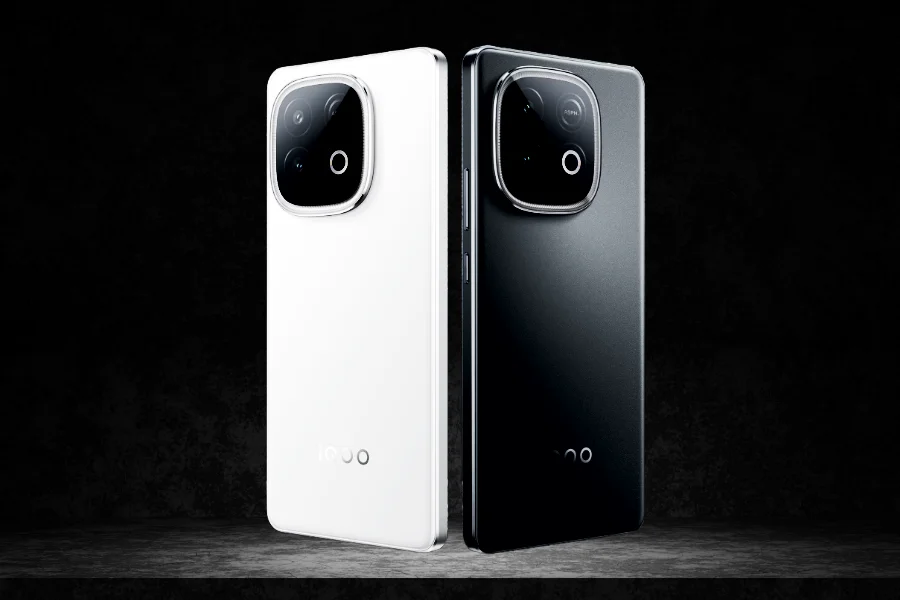
The iQOO Neo 10 is widely considered one of the strongest performance-to-price options available in India in 2026. It runs a Snapdragon 8s Gen 4 processor, which delivers performance that matches or exceeds many phones sold at significantly higher prices. The 144Hz AMOLED display makes gaming visually smooth. The 7,000 mAh battery with 120W FlashCharge means you can play for hours and charge back to full in under thirty minutes. iQOO’s gaming-specific software optimizations — including a dedicated game mode that allocates resources for consistent frame rates — make it the strongest choice for mobile gamers in this price range.
Best for Camera and Overall Balance — OnePlus 13s (approximately ₹45,999)
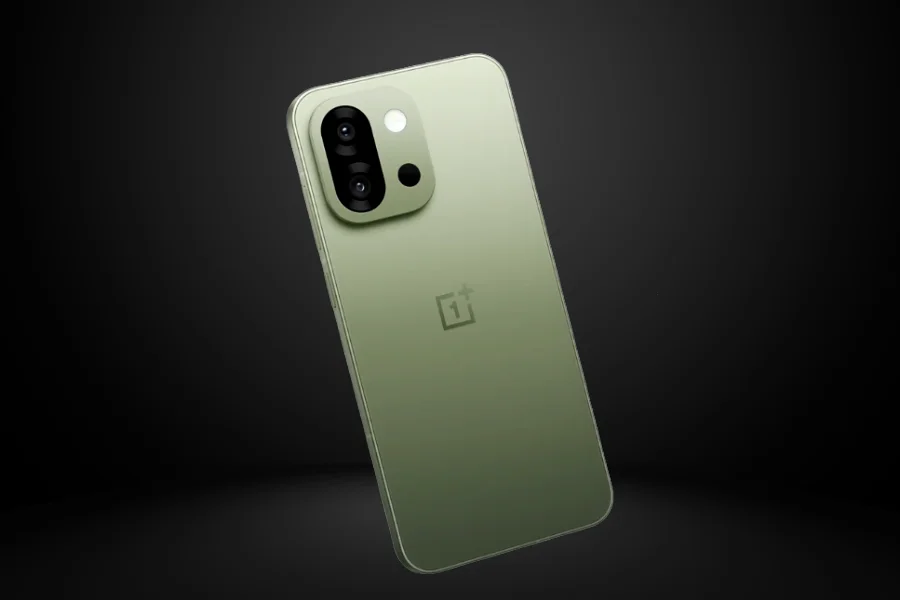
OnePlus continues to dominate the ₹40,000 to ₹50,000 range with the 13s — a phone that balances performance, camera quality, software experience, and build quality as well as anything available at its price. The Snapdragon 8 Gen 2 delivers flagship-level performance in everyday tasks. The camera system, tuned with Hasselblad color science, produces consistently good results across a range of conditions. OxygenOS remains one of the cleanest and most feature-rich Android skins available. The 100W SUPERVOOC charging fills the 5,000 mAh battery in approximately 28 minutes.
Best for Battery Life — POCO F7 5G (approximately ₹33,999)
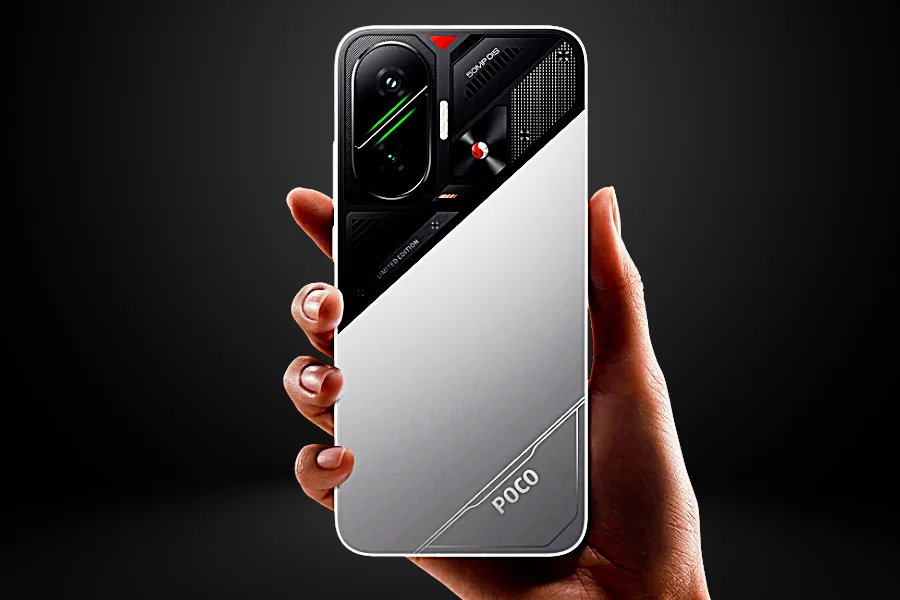
If battery life is your primary concern, the POCO F7 5G is the most compelling option in the flagship killer segment. Its 7,550 mAh battery — the largest available in India at this price range — delivers genuine two-day usage for most users. The Snapdragon 8s Gen 4 handles everything from heavy gaming to 4K video without thermal issues. At its price point, the combination of large battery, fast processor, and clean MIUI Global software makes it a strong all-rounder that prioritizes endurance above all else.
Best for Clean Software and Long-Term Support — Motorola Edge 60 Pro (approximately ₹28,499)
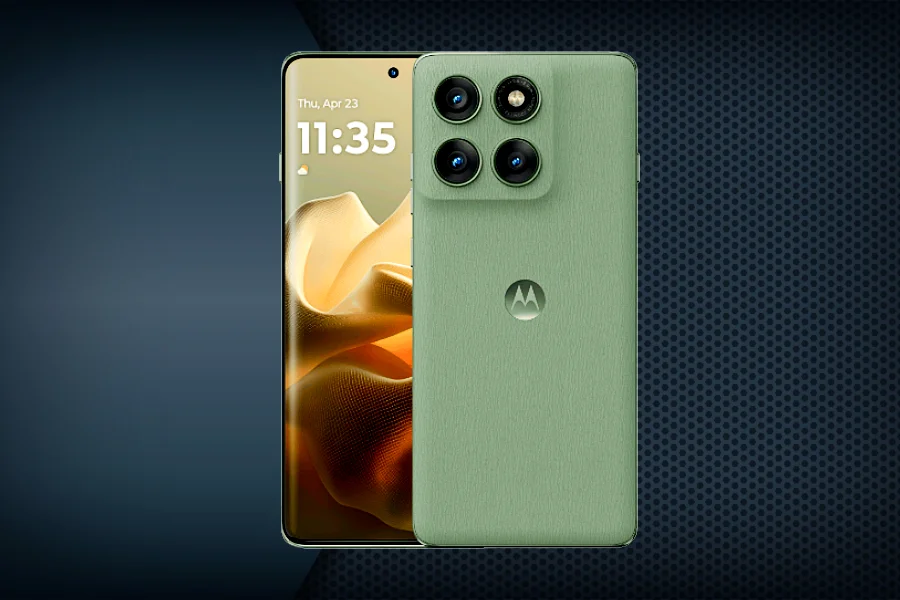
Motorola’s near-stock Android experience is its strongest selling point in the flagship killer segment. The Edge 60 Pro runs Android 15 with minimal customization, which means faster updates, less bloatware, and a cleaner daily experience than most Android skins. The Dimensity 9400+ processor delivers excellent performance. The camera system is balanced and consistent. For users who want a phone that feels uncomplicated and stays current — and who find heavily customized Android interfaces frustrating — the Edge 60 Pro is worth serious consideration.
Best Value Under ₹30,000 — Samsung Galaxy A56 5G (approximately ₹27,999)
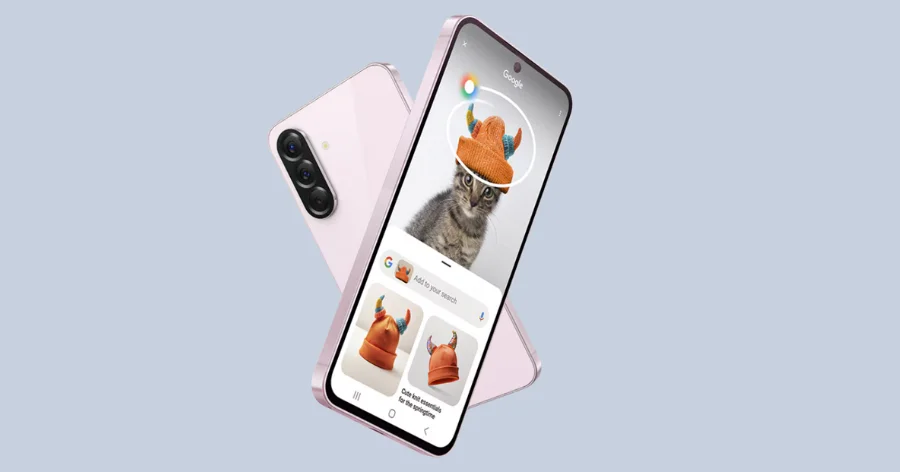
The Samsung Galaxy A56 5G deserves specific mention because it brings Samsung’s core strengths — display quality, Easy Mode for accessibility, Samsung DeX, and long software support — to a price that puts them within reach of a much larger segment of Indian buyers. The 6.7-inch Super AMOLED display is genuinely excellent. Samsung offers four years of OS updates and five years of security patches, which is the longest update commitment available in this price range. For buyers who value Samsung’s ecosystem, Easy Mode for family members, and longer software support over raw performance, the A56 is the strongest sub-₹30,000 option.
How to Decide Between a Flagship Killer and a True Flagship
The decision is simpler than the marketing makes it seem. Ask yourself these questions honestly.
Do you shoot professional video or serious photography?
If you create content that relies on optical zoom, professional video capabilities, or low-light photography that needs to be genuinely excellent — consider a true flagship. The iPhone 17 Pro and Samsung Galaxy S25 Ultra’s camera systems are meaningfully ahead of anything in the flagship killer range.
Do you plan to use this phone for more than five years?
If yes, the software update commitment of the Galaxy S25 Ultra or iPhone 17 Pro matters significantly. Six to seven years of updates means security patches and new features through 2031. Most flagship killers will stop receiving updates by 2028 or 2029.
Is the ₹70,000 to ₹1,00,000 price difference genuinely within your comfortable budget?
If spending ₹1,00,000 on a phone requires financial strain or significantly delays other goals — the flagship killer is the smarter choice. The performance difference will not justify the financial sacrifice for most everyday use cases.
Do you use your phone primarily for streaming, social media, calls, navigation, and photography in good lighting?
A flagship killer handles all of this as well as any phone available, at any price. The flagship premium buys you capabilities most users never need.
If you answered no to the first two questions and yes to the third — a flagship killer is almost certainly the right choice.
The Brands That Built the Flagship Killer Category in India
Understanding which brands have defined this segment helps you navigate the choices.
OnePlus created the category and continues to be its most recognized name. Its combination of clean OxygenOS software, Hasselblad camera collaboration, and premium build quality at non-premium prices has defined what a flagship killer should feel like. OnePlus phones are typically the most balanced across all dimensions — performance, camera, software, build, and update support.
iQOO, Vivo’s gaming-focused sub-brand, has become the strongest performance option in the segment. Its phones prioritize raw processing power, large batteries, and fast charging above other considerations — making them the default recommendation for mobile gamers.
Samsung’s Galaxy A series brings Samsung’s display expertise, Easy Mode, and long update commitments to the ₹20,000 to ₹40,000 range — making it the strongest choice for buyers who want the Samsung ecosystem without flagship pricing.
POCO and Xiaomi compete aggressively on specifications per rupee — consistently delivering the highest raw specification numbers at each price point, even if software and camera consistency occasionally lag behind OnePlus and Samsung.
Motorola competes on software cleanliness and camera consistency — appealing to buyers who want a near-stock Android experience with reliable, predictable performance.
Nothing has entered the Indian flagship killer market with design-differentiated devices and a clean Android UI that has attracted significant attention from buyers who want something visually distinctive.
Key Takeaway
The flagship killer segment in 2026 is not a compromise — it is the sweet spot of the Indian smartphone market. For the ₹25,000 to ₹60,000 you spend on a genuinely capable flagship killer, you get ninety to ninety-five percent of the experience of a phone that costs two to three times more. The five to ten percent you give up — primarily in camera capabilities, premium materials, and software update duration — is genuinely irrelevant for most users most of the time.
Flipkart and Counterpoint’s market data confirms what buyers have already decided: this is where the best value lives in Indian smartphones in 2026. The brands competing in this segment are putting their best engineering into it. The result is the most capable ₹30,000 to ₹50,000 smartphones that have ever existed.
If you are upgrading your phone in 2026 and do not have a specific professional need that only a true flagship can meet — start your search here.
Frequently Asked Questions
What exactly makes a phone a flagship killer and not just a mid-range phone?
A flagship killer is specifically a phone that delivers flagship-level performance in its most important categories — processor, display, camera, and battery — at a significantly lower price. Not every phone in the ₹25,000 to ₹60,000 range qualifies. A flagship killer uses a top-tier or near-top-tier processor, has a premium AMOLED display with high refresh rate, includes optical image stabilization in its main camera, and offers fast charging above 50W. Mid-range phones in the same price range often cut corners in one or more of these areas.
Is OnePlus still the best flagship killer brand in India?
OnePlus remains the most recognized flagship killer brand and offers the best overall balance of performance, software, camera, and build quality at each price point. However, iQOO has surpassed it for gaming performance specifically, and Samsung’s A-series provides stronger update support and display quality in the ₹25,000 to ₹35,000 range. The best brand depends on which aspect of the phone matters most to you.
Should I buy a flagship killer or save more for a true flagship?
For most Indian users, a flagship killer is the better financial decision in 2026. The performance difference between a ₹35,000 flagship killer and a ₹1,00,000 true flagship is much smaller than the price difference. The exceptions are professional photographers, content creators who need the best camera system available, and users who plan to keep their phone for six or more years and value the extended software support.
Do flagship killer phones last as long as true flagships?
In terms of hardware durability, a well-made flagship killer from OnePlus, iQOO, or Samsung can physically last as long as any premium phone with normal care. The difference in longevity is primarily in software support. Most flagship killers receive three to four years of updates. True flagships from Apple and Samsung now offer six to seven years. If software updates matter to you over a long ownership period, this difference is meaningful.
Are 5G flagship killer phones worth buying in India in 2026?
Yes, absolutely. 5G is available across most major Indian cities and towns in 2026, and the price premium for 5G over 4G in the flagship killer segment is minimal or nonexistent — virtually every flagship killer phone in this range includes 5G. Buying a 5G phone future-proofs your purchase for the length of the phone’s useful life without any meaningful cost penalty.
Which flagship killer phone has the best battery in India right now?
The POCO F7 5G has the largest battery in the flagship killer segment at 7,550 mAh with 90W charging. The iQOO Neo 10 pairs a 7,000 mAh battery with 120W FlashCharge for the fastest charging in the segment. If longevity between charges is the priority, the POCO F7 wins. If fast top-up charging matters more, the iQOO Neo 10 edges ahead.
Final Thoughts
The flagship killer is not a new concept but it has never been more relevant than it is in 2026. True flagships have become genuinely aspirational luxury items whose premium is increasingly justified only by specific professional use cases. Meanwhile, the phones in the ₹25,000 to ₹60,000 range have quietly become excellent — not just adequate, not just good value, but genuinely excellent smartphones that most users will never outgrow.
The shift in the Indian market is real. Buyers are smarter, upgrade cycles are longer, and the tolerance for spending more than necessary for incremental improvements has dropped. The flagship killer is what rational smartphone buying looks like in 2026.