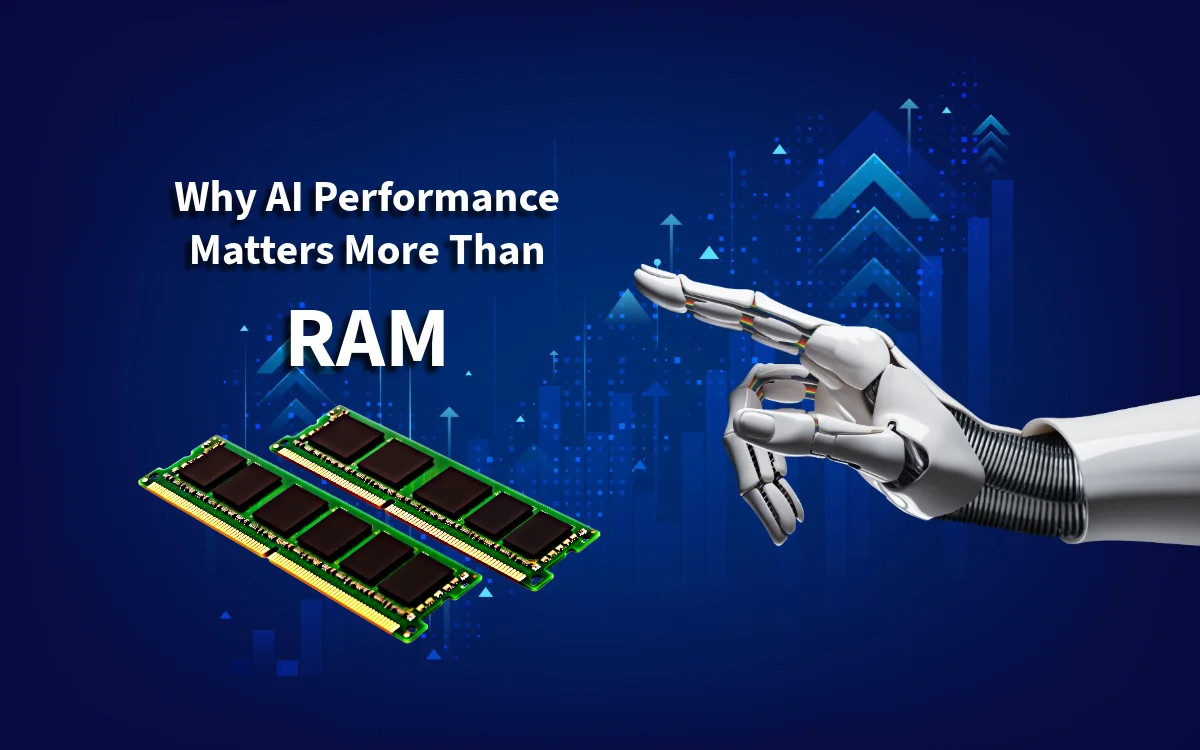
For years, smartphone buyers asked one simple question:
“How much RAM does it have?”
8GB? Good.
12GB? Better.
16GB? Premium.
But in 2026, that question is no longer enough.
Today, the real performance battleground is AI processing power inside the chipset — not just RAM size.
From AI photography to on-device generative tools, modern smartphones depend more on neural engines than memory numbers.
Let’s break this down — with real-world facts.
Quick Answer
In 2026, AI performance matters more than RAM because:
- Most daily smartphone features are AI-driven
- On-device generative AI requires neural acceleration
- Camera processing depends heavily on AI
- Security and call screening use AI models
- RAM requirements have stabilized for average users
RAM helps multitasking.
AI hardware powers intelligence.
What Is Inside a Smartphone Chip?
A smartphone chip (SoC – System on Chip) includes:
- CPU (for general tasks)
- GPU (for graphics & gaming)
- NPU (Neural Processing Unit for AI)
- ISP (Image Signal Processor for cameras)
- Modem (for connectivity)
Modern chips from Apple, Qualcomm, Samsung, and MediaTek now emphasize AI engines as a core selling point.
And here’s where real numbers tell the story.
Real-World Fact #1: AI Performance Is Measured in TOPS
AI capability is measured in TOPS (Trillions of Operations Per Second).
For example:
- Apple’s A17 Pro chip includes a Neural Engine capable of 35 TOPS.
- Qualcomm Snapdragon 8 Gen 3 supports 45+ TOPS of AI performance.
- Recent flagship chips in 2025–2026 exceed 40–60 TOPS, depending on configuration.
By comparison, smartphone chips in 2019–2020 were below 10 TOPS.
That’s a massive leap in AI processing capability in just a few years.
Why RAM Used to Be the Big Deal
RAM helps your phone:
- Keep apps open
- Prevent reloads
- Run heavy games
- Switch between tasks
But operating systems like Android and iOS now:
- Use memory compression
- Freeze background apps
- Optimize RAM allocation intelligently
In real-world usage:
Most users rarely exceed 8GB–12GB RAM needs.
More RAM doesn’t automatically improve AI performance.
Real-World Fact #2: AI Powers Modern Camera Systems
When you take a photo in 2026:
- Multiple frames are captured
- Noise reduction is applied
- HDR is balanced
- Faces are enhanced
- Sky color is optimized
- Background blur is calculated
This is called computational photography.
Devices like:
- Google Pixel series
- Apple iPhone lineup
Rely heavily on AI inference running through neural engines — not RAM size.
More RAM does not improve image processing quality.
Stronger AI acceleration does.
Real-World Fact #3: On-Device Generative AI Needs AI Chips
In 2026, many smartphones can:
- Summarize text locally
- Generate smart replies
- Edit images with AI
- Translate speech in real time
These tasks involve running neural network models directly on the device.
Without a strong NPU:
- AI tasks become slower
- Battery drains faster
- Cloud dependency increases
AI accelerators are designed specifically for matrix calculations — something general RAM cannot optimize.
RAM vs AI Performance (Real Usage Comparison)
| Task | More RAM Helps? | Stronger AI Engine Helps? |
|---|---|---|
| Gaming | Yes | Slightly |
| Multitasking | Yes | Indirect |
| AI Camera | No | Yes |
| Live Translation | No | Yes |
| AI Writing Tools | No | Yes |
| Smart Call Screening | No | Yes |
| Face Recognition | No | Yes |
In 2026, many daily features depend on AI engines — not just memory capacity.
Real-World Fact #4: Chip Marketing Has Shifted
If you look at modern flagship launches, brands now highlight:
- AI performance (TOPS)
- Neural engine upgrades
- On-device AI capabilities
- Generative AI features
For example:
Qualcomm emphasizes AI improvements in Snapdragon launches.
Apple focuses heavily on Neural Engine performance in keynote events.
RAM is mentioned — but AI performance is promoted more aggressively.
That shift reflects industry priorities.
Why 8GB–12GB RAM Is Enough in 2026
Modern OS optimizations mean:
- Background apps are paused efficiently
- Memory compression reduces usage
- AI workloads are offloaded to NPUs
Unless you’re:
- Running heavy 3D games constantly
- Doing advanced video editing
- Using desktop-level multitasking
You likely won’t notice the difference between 8GB and 16GB RAM in everyday tasks.
But you will notice slower AI features if the chip lacks neural power.
The Bigger Shift: Smartphones Are Becoming AI-First Devices
Smartphones are transitioning from:
“Performance-first devices”
To:
“Intelligence-first devices.”
AI hardware now powers:
- Smart photography
- Security monitoring
- AI agents
- Real-time content creation
- Voice processing
- Accessibility features
RAM supports performance.
AI engines define intelligence.
Does RAM Still Matter?
Yes — but selectively.
You still need sufficient RAM for:
- High-end gaming
- Multitasking heavy workflows
- Professional editing
But for most users in 2026:
AI performance has a bigger impact on daily experience than increasing RAM beyond 12GB.
Buying Advice for 2026
Instead of asking:
“How much RAM does this phone have?”
Ask:
- What chipset does it use?
- How many TOPS does it support?
- Does it support on-device AI features?
- How long will it receive AI-based updates?
Those questions determine future-proof performance.
Final Thoughts
The smartphone industry is shifting from raw specs to intelligent performance.
In 2026:
RAM helps your phone run.
AI hardware helps your phone think.
The brands investing in stronger neural engines are preparing devices not just for today’s apps — but for tomorrow’s AI-driven experiences.
So here’s the real question:
When buying your next smartphone, will you focus on memory size — or intelligence power?