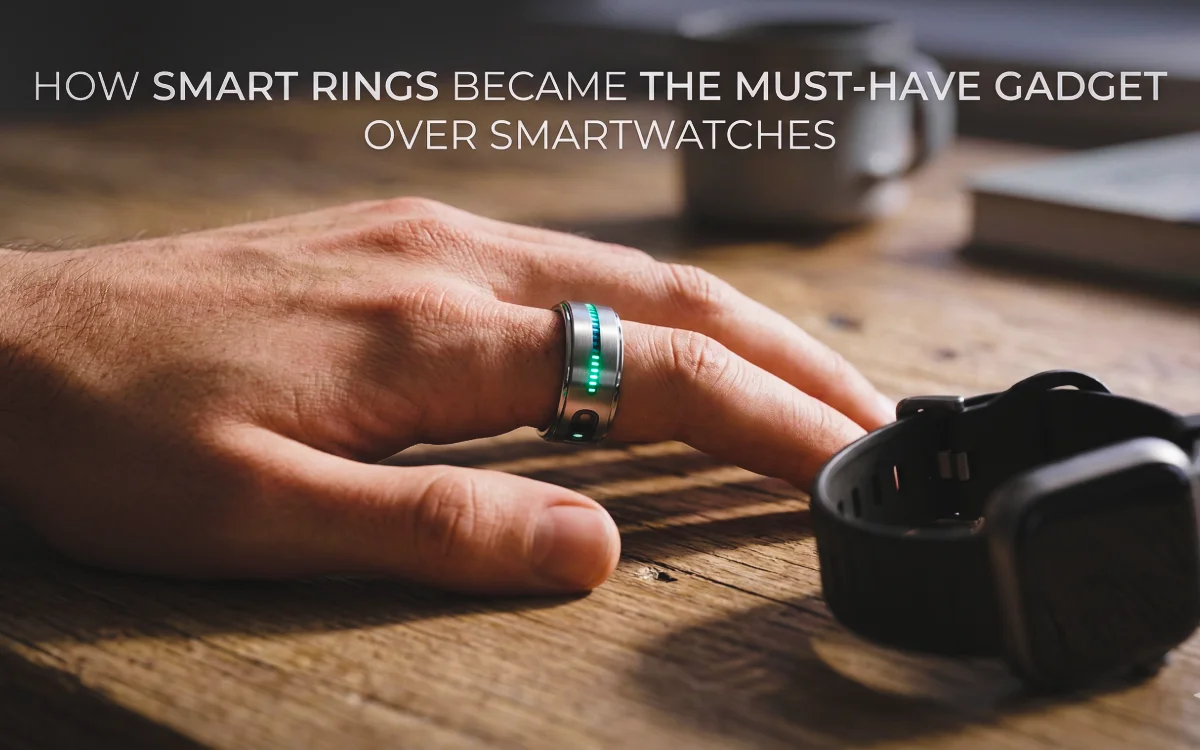
For many years, smartwatches were the stars of wearable technology. They promised everything—fitness tracking, notifications, calls, apps, and even mobile payments—all on your wrist.
But in the last few years, a quiet trend has begun to form.
Instead of buying another smartwatch, many tech enthusiasts and health-conscious users are switching to smart rings. These small devices sit on your finger and track health data without the bulky screen, constant notifications, or daily charging that come with most watches.
From what I’ve seen while testing wearable gadgets and following the wearable tech industry, smart rings are gaining popularity for a simple reason: they focus on what people actually use wearables for—health tracking.
And they do it in a way that feels more natural and less intrusive.
Let’s explore why smart rings are suddenly everywhere.
What Exactly Is a Smart Ring?
A smart ring is a wearable device designed to look and feel like a normal ring, but equipped with tiny sensors that track health and activity data.
Despite their small size, many modern smart rings can monitor:
- Heart rate
- Sleep patterns
- Daily activity
- Body temperature changes
- Blood oxygen levels
- Stress and recovery
All this information is sent to a companion app on your smartphone where you can view trends and insights about your health.
Unlike smartwatches, smart rings don’t have a screen. They silently collect data in the background as you go about your day.
Why People Are Choosing Smart Rings Instead of Smartwatches
There’s more to the growing popularity of smart rings than just one reason. There are several practical benefits that are attracting people to them.
They’re More Comfortable
Let’s be honest—wearing a smartwatch all day isn’t always comfortable.
Many people take off their watches at night because they feel bulky or interfere with sleep. But if you take them off at night, you lose the ability to track sleep.
Smart rings solve this problem quite well.
Because they’re small and lightweight, most users don’t even notice them after a few hours. Wearing them while sleeping feels more natural than wearing a watch on your wrist.
For continuous health tracking, comfort is crucial.
Sleep Tracking Is Often More Accurate
One surprising advantage of smart rings is their ability to track sleep.
Because the sensors are located on the finger—where blood flow signals are stronger—they can often capture more accurate readings for things like heart rate and heart rate variability during sleep.
This allows smart rings to provide detailed information about:
- Sleep stages
- Recovery level
- Heart rate at night
- Body temperature fluctuations
Many users purchase smart rings specifically to better understand their sleep patterns.
Battery Life Is Much Better
Battery life is another major advantage.
Most smartwatches need to be charged every one or two days, especially if you regularly use fitness tracking features.
Smart rings, on the other hand, can often last five to seven days on a single charge.
The reason is simple: without a bright display or constant notifications, they use very little power.
This makes them much easier to use for long periods of time.
They Reduce Digital Distractions
One thing people don’t always expect from a smartwatch is how distracting it can be.
Every notification, message, or alert appears on your wrist. Over time, this can actually increase your screen time rather than reduce it.
Smart rings take a very different approach.
They focus almost entirely on collecting health data rather than constantly displaying alerts. You check apps when you need information — not every time your phone rings.
For those trying to develop healthy tech habits, this minimalist design is refreshing.
Real-World Example: Athletes Using Smart Rings for Recovery
One group that has quickly adopted smart rings is athletes.
In sports, recovery is as important as training. Smart rings track signals like heart rate variability, resting heart rate, and sleep quality, helping athletes understand how well their body has recovered overnight.
These insights can help answer questions like:
Should I train harder today?
Is my body still recovering from yesterday’s workout?
Am I getting enough sleep to support performance?
Professional athletes and trainers are increasingly using wearable data to adjust training intensity and prevent injuries.
Real-World Example: Professionals Who Want Simpler Wearables
Smart rings are also appealing to professionals who prefer subtle technology.
Checking a smartwatch repeatedly during meetings can look distracting or unprofessional. A ring, however, simply tracks data quietly without requiring attention.
You review your health insights later when it’s convenient.
This makes smart rings ideal for people who want the benefits of wearable technology without drawing attention to it.
Smart Rings vs Smartwatches
| Feature | Smart Rings | Smartwatches |
|---|---|---|
| Size | Very small | Larger wearable |
| Battery Life | 5–7 days | 1–2 days |
| Sleep Tracking | Very strong | Good |
| Notifications | Minimal | Full notifications |
| Health Focus | Primary purpose | One of many features |
| Screen | None | Touchscreen |
Smartwatches still offer many features like apps, calls, and notifications. But for people mainly interested in health tracking, smart rings often feel simpler and more convenient.
Why Smart Rings Appeal to Minimalist Tech Users
There’s a growing movement toward simpler technology.
Many people want devices that improve their health or productivity without adding more screens and distractions to daily life.
Smart rings fit perfectly into this idea.
They provide useful data about your health while staying almost invisible. Instead of constantly interacting with a device, you simply review the insights when needed.
This subtle approach is exactly what many users are looking for today.
Things to Consider Before Buying a Smart Ring
If you’re thinking about buying one, there are a few practical things to keep in mind.
Make Sure the Fit Is Correct
Smart rings rely on accurate sensor contact with your finger. Most companies provide sizing kits before purchase to ensure the correct fit.
Check Battery Life
Look for a ring that offers at least five days of battery life. Longer battery life makes continuous health tracking easier.
Review the Companion App
The smartphone app plays a huge role in the experience. A well-designed app should present health data clearly and provide useful insights rather than overwhelming charts.
Focus on the Health Features That Matter to You
Different smart rings offer different sensors. If your goal is sleep improvement or fitness tracking, check which metrics the device actually measures.
Limitations of Smart Rings
While smart rings are impressive, they’re not perfect.
They usually cannot:
- show notifications
- answer phone calls
- run apps
Some advanced models can also be expensive, costing as much as premium smartwatches.
For users who want a full smartwatch experience, watches still have advantages.
The Future of Smart Rings
Wearable technology is gradually becoming smaller and more discreet.
In the future, smart rings could include even more advanced features such as:
- blood pressure monitoring
- hydration tracking
- glucose monitoring
- gesture controls for phones and computers
As sensors continue to shrink, the idea of invisible wearable technology will likely become more common.
Final Thoughts
Smartwatches helped introduce wearable technology to millions of people. But as technology evolves, users are starting to prefer devices that fit more naturally into everyday life.
Smart rings represent that shift.
They deliver meaningful health insights without adding another screen or another daily charging routine.
For many people, that combination of comfort, simplicity, and powerful health tracking is exactly what wearable technology should have been all along.