In 2026, the most powerful companies in the world aren’t just competing over apps or software platforms.
They’re competing over chips.
Artificial intelligence has triggered one of the biggest shifts in modern tech history: computing power is now the most valuable resource. Training large AI models, running generative AI tools, powering smart devices, and operating massive data centers all depend on advanced semiconductor hardware.
AI innovation is no longer limited by software creativity — it is limited by silicon capacity.
And that’s why chips have become the new global battleground.
Quick Answer
AI hardware refers to specialized semiconductor chips designed to handle artificial intelligence workloads efficiently.
In 2026, chips are the new competitive battlefield because:
- AI models require enormous computing power
- GPU demand has surged globally
- Big tech companies are designing custom silicon
- Data centers are expanding at record speed
- AI hardware is now tied to economic and national strategy
In simple terms: Whoever leads in AI chips leads in AI itself.
Why AI Hardware Is Suddenly So Important
Artificial intelligence systems today are far more complex than they were just a few years ago.
Modern models require:
- Billions (sometimes trillions) of parameters
- Massive parallel processing
- High-bandwidth memory
- Continuous retraining
Traditional CPUs were never designed for this scale of computation.
That’s where specialized AI hardware comes in.
GPUs Became the Backbone of AI
Originally designed for gaming graphics, GPUs turned out to be ideal for AI because they process many calculations simultaneously.
This unexpected advantage reshaped the semiconductor industry.
NVIDIA, once known primarily for gaming GPUs, became one of the most valuable companies in the world after its AI-focused data center chips became essential for training large models.
In recent years, NVIDIA’s data center revenue has grown dramatically due to AI demand.
That growth reflects a simple reality:
AI companies cannot function without high-performance GPUs.
The Explosion of AI Data Centers
AI services — from generative text tools to recommendation systems — require massive server infrastructure.
Data centers in 2026 now include:
- AI-optimized GPUs
- Advanced cooling systems
- High-speed interconnects
- Custom AI accelerators
These facilities consume enormous amounts of power.
In fact, AI-related data center electricity demand is rising rapidly worldwide, forcing companies to invest in more energy-efficient hardware.
Efficiency is no longer optional — it’s critical.
Custom Silicon: Big Tech Wants Control
Relying solely on third-party chips is risky and expensive.
That’s why major technology companies are designing their own AI processors.
For example:
- Google developed Tensor Processing Units (TPUs) for AI training and inference.
- Apple integrates Neural Engines into its A-series and M-series chips.
- Amazon designs custom AI chips for cloud services.
- Microsoft is investing in AI silicon to support cloud infrastructure.
Why this shift?
Because AI hardware directly affects:
- Performance speed
- Operational cost
- Power consumption
- Competitive advantage
Owning the chip stack means controlling margins and innovation speed.
Smartphones: AI Hardware at the Edge
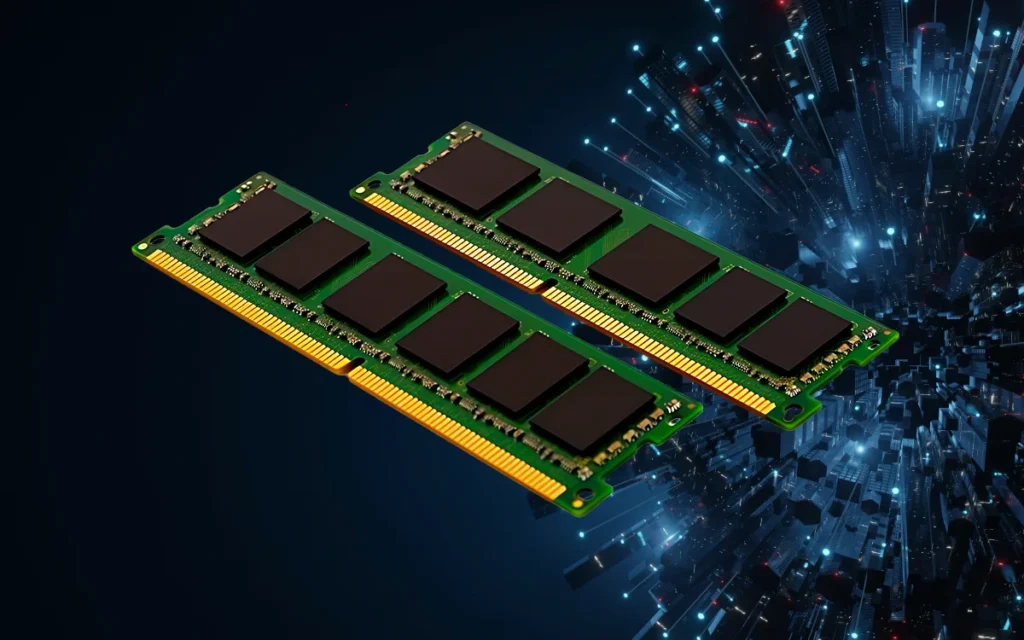
AI isn’t limited to cloud servers.
Modern smartphones now include:
- Dedicated NPUs (Neural Processing Units)
- On-device generative AI support
- Real-time camera AI processing
- AI-powered security detection
Companies like Qualcomm and Apple now promote AI performance in TOPS (Trillions of Operations Per Second).
This reflects a shift toward edge AI — processing intelligence locally instead of relying entirely on cloud servers.
AI hardware is becoming essential even in pocket-sized devices.
AI Hardware vs Traditional CPUs
| Feature | Traditional CPU | AI-Optimized Chip |
|---|---|---|
| Designed For | General computing | Neural networks |
| Parallel Processing | Limited | Extremely high |
| AI Efficiency | Moderate | Optimized |
| Energy Usage per AI Task | Higher | Lower |
| Training Large Models | Slow | Designed for it |
AI requires specialized architecture.
General-purpose processors simply cannot keep up.
The Semiconductor Supply Chain Challenge
AI hardware isn’t easy to produce.
Advanced chips require:
- Extreme ultraviolet (EUV) lithography
- Multi-billion-dollar fabrication plants
- Highly specialized engineering
Manufacturing capacity is concentrated among a small number of global companies.
This has led to:
- Strategic investments in semiconductor manufacturing
- Government incentives
- Supply chain diversification efforts
AI hardware is now part of economic strategy discussions worldwide.
Economic Impact: Why This Is Bigger Than Tech
The AI chip industry is influencing:
- Stock market valuations
- National industrial policies
- Trade relationships
- Energy infrastructure planning
Semiconductor companies have seen significant valuation growth in recent years due to AI demand.
This isn’t just a tech story — it’s an economic shift.
Chips are becoming as strategically important as oil pipelines were decades ago.
The Energy Reality
AI training clusters require enormous electricity.
Data centers supporting large AI systems consume significant energy resources.
This has created pressure to:
- Design more energy-efficient chips
- Develop better cooling technologies
- Optimize chip architecture for lower power usage
Performance per watt is now as important as raw performance.
The next AI breakthrough may come from efficiency improvements — not just speed.
What This Means for Consumers
Even if you’re not building AI models, this shift affects you.
AI hardware influences:
- Smartphone prices
- Laptop performance
- Cloud service costs
- Availability of AI features
- Device battery efficiency
The cost and availability of AI chips directly shape the devices you buy.
The Future of AI Hardware
Looking ahead:
- Edge AI devices will grow
- AI-specific architectures will become more specialized
- Hybrid cloud-edge computing will expand
- Advanced packaging technologies will improve performance
We may even see new chip designs inspired by the human brain (neuromorphic computing).
AI progress is now tightly connected to hardware innovation.
Final Thoughts
In 2026, the biggest competition in tech isn’t about apps or platforms.
It’s about silicon.
AI models depend on chips.
Data centers depend on GPUs.
Smartphones depend on neural engines.
The future of artificial intelligence is being shaped not just by code — but by circuitry.
And that makes AI hardware the most critical technology battleground of this decade.
Here’s the real question:
If control over advanced chips determines AI leadership, will the next global tech superpower be defined by software innovation — or semiconductor dominance?