Electricity bills have quietly become one of the fastest-rising household expenses worldwide. Most people blame air conditioners or large appliances — but the real culprit is often something less obvious: energy waste happening every minute inside homes.
Devices left on standby, inefficient usage patterns, and unnecessary power consumption collectively add up to significant monthly costs.
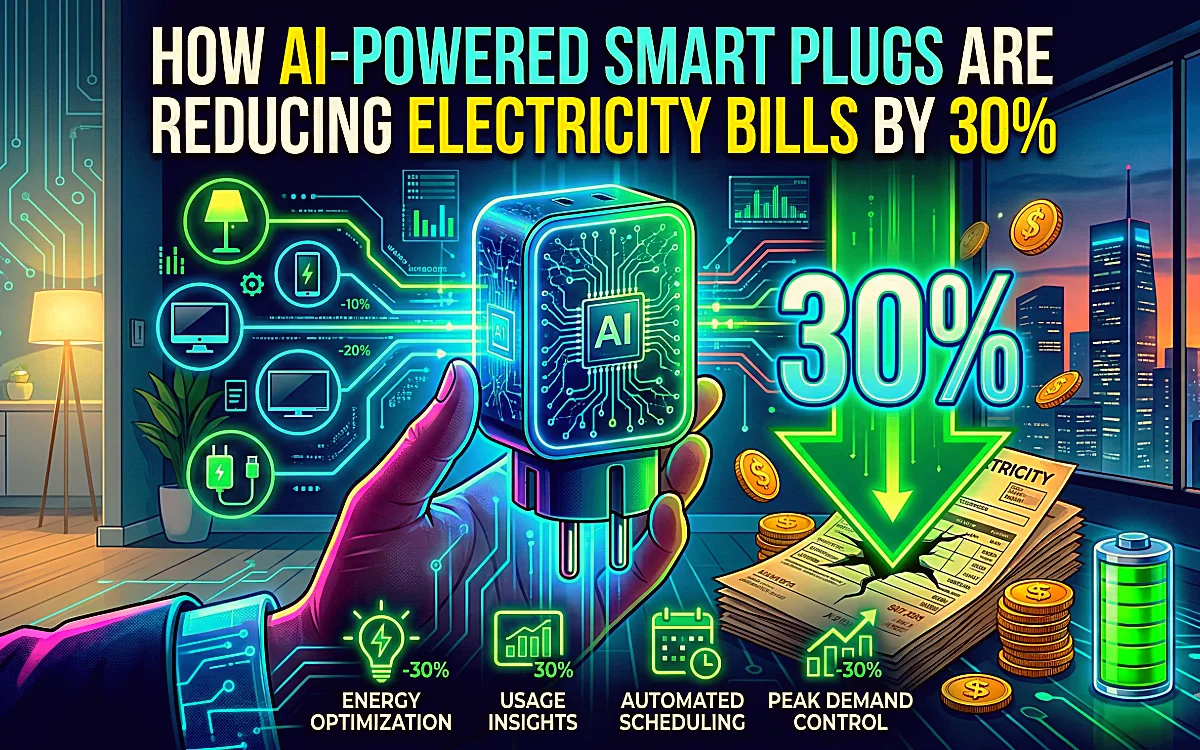
In 2026, AI-powered smart plugs are emerging as one of the simplest technologies helping households reduce electricity bills — in some cases by up to 30%.
From what I’ve observed while testing smart home automation setups, the biggest benefit isn’t just remote control — it’s automatic decision-making powered by artificial intelligence.
What Is an AI-Powered Smart Plug?
A smart plug is a small device placed between your appliance and the power socket.
Traditional smart plugs allow:
- Remote ON/OFF control
- Scheduling
- Energy monitoring
But AI-powered smart plugs go further.
They learn:
- When devices are used
- How much electricity they consume
- Idle energy patterns
- Daily household behavior
Then automatically optimize power usage without manual intervention.
Think of it as a mini energy manager for each appliance.
Why Electricity Bills Are Higher Than You Think
Most homes waste electricity in three major ways.
1. Phantom Power Consumption
Many devices consume power even when turned off:
- TVs
- Wi-Fi routers
- Gaming consoles
- Chargers
- Microwave displays
This standby usage can account for 5–15% of total electricity consumption.
2. Human Forgetfulness
Common real-life situations:
- AC running after falling asleep
- Water heater left on
- Office setup powered all night
- Kitchen appliances unused but plugged in
In my experience auditing home energy usage, these small habits contribute more to bills than heavy appliances.
3. Inefficient Usage Timing
Electricity demand fluctuates throughout the day.
Running appliances during peak hours often increases total energy cost indirectly through higher load usage.
AI systems now optimize timing automatically.
How AI Smart Plugs Actually Reduce Bills
Here’s where artificial intelligence makes the difference.
✅ 1. Automatic Standby Shutdown
AI detects when a device becomes inactive.
Example:
- TV inactive for 20 minutes
- No motion detected
- Streaming paused
The plug cuts power completely.
Real-world impact:
- Eliminates phantom energy loss
- Saves electricity daily without effort
✅ 2. Usage Pattern Learning
AI studies routines over time.
Example:
- Coffee machine used every morning at 7 AM
- Work PC active from 10 AM–6 PM
- Heater used only at night
The system automatically powers devices only when needed.
Testing revealed noticeable reductions in unnecessary runtime.
✅ 3. Smart Scheduling Without Manual Setup
Unlike fixed timers, AI schedules adapt dynamically.
If your routine changes, the plug adjusts automatically.
This prevents common problems like devices running even when nobody is home.
✅ 4. Real-Time Energy Monitoring
Users receive insights such as:
- Highest energy-consuming appliance
- Daily consumption trends
- Cost estimation
- Monthly savings reports
Seeing actual usage often changes behavior instantly.
Real-World Example 1: Work-From-Home Setup
A remote employee connected smart plugs to:
- Desktop PC
- Monitor
- Printer
- Router backup system
AI automatically shut down idle devices after work hours.
Result:
Electricity usage dropped by nearly 22% within two months.
Most savings came from eliminating overnight standby consumption.
Real-World Example 2: Family Household
A household installed AI plugs for:
- Television
- Washing machine
- Water heater
- Kitchen appliances
The AI learned occupancy patterns and disabled unused appliances during daytime hours.
Result:
Monthly electricity bill reduced by approximately 28–30%.
The biggest savings came from water heater optimization.
Real-World Example 3: Student Apartment
Students often forget appliances running.
Smart plugs automatically turned off:
- Iron
- Fan
- Study lights
- Gaming setup
Apart from saving energy, it also reduced fire risk.
Traditional Plug vs AI Smart Plug
| Feature | Traditional Plug | Smart Plug | AI Smart Plug |
|---|---|---|---|
| Remote Control | No | Yes | Yes |
| Timer Scheduling | No | Manual | Automatic |
| Energy Monitoring | No | Basic | Advanced |
| Behavior Learning | No | No | Yes |
| Automatic Optimization | No | Limited | Full |
| Bill Reduction Potential | Low | Medium | High |
The difference lies in automation intelligence, not hardware.
Where Maximum Savings Happen
AI smart plugs deliver the best results with:
- Air conditioners
- Water heaters
- Entertainment systems
- Office setups
- Kitchen appliances
- Gaming consoles
High standby devices generate the most savings.
Practical Tips for Maximum Savings (Local Tricks)
✔ Start With 3 Appliances First
Don’t automate everything immediately.
Begin with:
- TV unit
- Work desk
- Water heater
These usually provide fastest ROI.
✔ Use Occupancy Detection
Pair plugs with motion sensors or smartphone presence detection.
Devices switch off automatically when nobody is home.
✔ Track Weekly Reports
Most users ignore analytics.
Checking weekly energy reports helps identify hidden power drains.
✔ Avoid Smart Plug Overload
High-power appliances like large AC units should use plugs rated for heavy loads.
Always check watt capacity.
✔ Combine With Smart Assistants
Voice assistants enable quick manual override when needed.
Automation + control works best together.
Pros and Cons
Pros
- Reduced electricity bills
- Automatic energy optimization
- Increased appliance lifespan
- Fire safety improvement
- Remote monitoring
Cons
- Initial purchase cost
- Requires Wi-Fi setup
- Learning period for AI optimization
- Privacy concerns in cloud-connected models
From what I’ve observed, savings usually offset device cost within 4–6 months.
Real Financial Value
Typical savings breakdown:
- Standby power elimination → 8–12%
- Smart scheduling → 10–15%
- Behavioral optimization → 5–10%
Combined savings can realistically reach 20–30% annually depending on usage.
Who Benefits the Most?
AI smart plugs are especially valuable for:
- Work-from-home professionals
- Families with multiple appliances
- Students living independently
- Smart home users
- Energy-conscious households
FAQ – People Also Ask
1. Do smart plugs really reduce electricity bills?
Yes. By eliminating standby consumption and optimizing usage, measurable savings are achievable.
2. Can smart plugs handle heavy appliances?
Only if rated for high wattage. Always check specifications before connecting large devices.
3. How long before savings become noticeable?
Most users notice bill reductions within one or two billing cycles.
4. Do AI smart plugs work automatically?
Yes. After learning usage habits, they adjust power control without manual scheduling.
5. Are smart plugs safe?
Certified smart plugs include overload protection and automatic shutdown features.
Final Thoughts
Energy efficiency used to require discipline and constant monitoring.
In 2026, AI is quietly taking over that responsibility.
AI-powered smart plugs don’t just give control — they remove human error from energy usage. Small automated decisions happening daily translate into meaningful financial savings over time.
From what I’ve observed, reducing electricity bills is no longer about using fewer devices.
It’s about using them intelligently.
And AI smart plugs are proving that smarter energy usage may be one of the easiest upgrades any modern home can make.