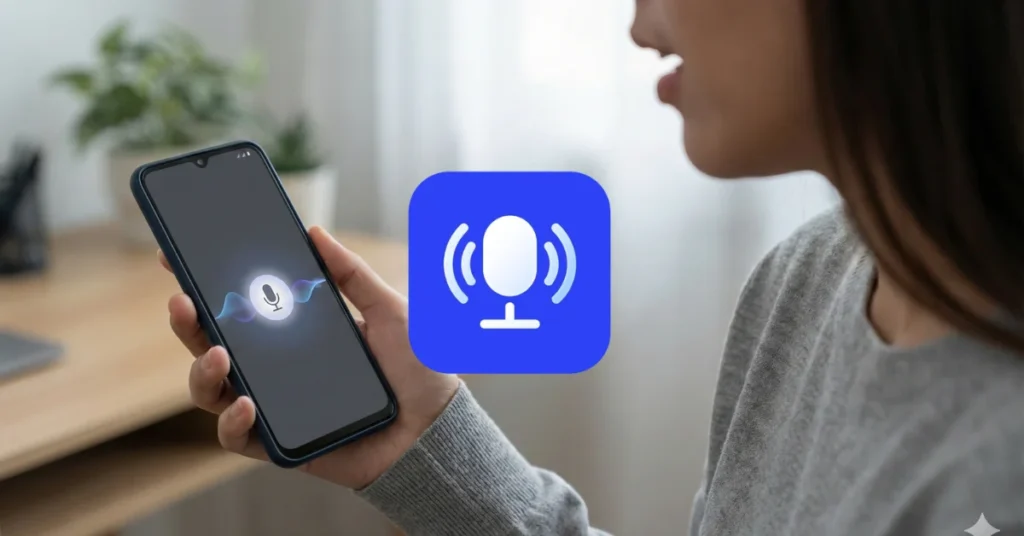
Open your camera. Take a photo. Unlock your phone with your face. Ask your voice assistant to set a reminder.
All of this feels instant.
But here’s what most people don’t realize: in 2026, many of these AI features are no longer powered by distant cloud servers. They’re running directly inside your phone.
This shift toward on-device AI is one of the biggest smartphone upgrades of this decade — even bigger than higher megapixels or faster processors.
Let’s break it down in simple language.
Quick Answer
On-device AI means artificial intelligence runs directly on your smartphone’s hardware instead of sending data to cloud servers.
It matters in 2026 because it:
- Protects your privacy
- Works without internet
- Responds instantly
- Reduces cloud dependency
- Improves battery efficiency
- Enables real-time smart features
In short, your phone is becoming powerful enough to “think” on its own.
What Is On-Device AI? (Simple Explanation)
Traditionally, AI features worked like this:
Phone → Internet → Cloud Server → Back to Phone
That means your data (voice, photos, messages) was processed remotely.
With on-device AI, the process becomes:
Phone → AI Chip → Instant Result
Everything happens locally.
Modern smartphones include special AI hardware components such as:
- Neural Processing Units (NPUs)
- AI engines
- Tensor accelerators
- Dedicated neural cores
Companies like Apple, Samsung, Qualcomm, and Google now design chips specifically optimized for AI workloads.
In 2026, these AI chips are standard in flagship — and increasingly mid-range — devices.
Why On-Device AI Matters More Than Ever in 2026
1. Privacy Is Now a Selling Point
Users are more concerned about data leaks and surveillance than ever before.
When AI runs in the cloud:
- Photos may be uploaded
- Voice recordings are transmitted
- Personal data leaves your device
With on-device AI:
- Data stays on your phone
- Processing happens locally
- Exposure risk is significantly reduced
This is especially important for:
- AI writing tools
- Smart replies
- Health monitoring apps
- Voice assistants
Privacy has moved from “feature” to “priority.”
2. Instant Speed and Zero Lag
Cloud AI depends on:
- Internet quality
- Server load
- Network latency
On-device AI eliminates that delay.
That’s why in 2026 you see:
- Real-time photo editing
- Instant live translation
- Immediate voice-to-text
- AI typing suggestions without delay
The experience feels smoother because there’s no waiting for a server response.
3. Works Completely Offline
This is underrated.
On-device AI allows:
- Offline language translation
- Voice assistant basic commands
- AI photo enhancements
- Smart search inside gallery
- Face unlock
Even in airplane mode.
For travelers or users in weak network areas, this is a huge advantage.
Real-World Examples of On-Device AI
AI Photography
When you capture an image:
- Scene detection
- Night mode processing
- HDR balancing
- Portrait background blur
All happen in milliseconds on your phone.
Devices from Google are known for computational photography that relies heavily on local AI processing.
Without on-device AI, modern smartphone photography wouldn’t look this good.
AI Writing & Smart Features (Major 2026 Trend)
Many smartphones now include:
- On-device message summarization
- Email drafting assistance
- Smart reply suggestions
- Grammar correction
Instead of sending your private conversations to servers, lightweight AI models process text locally.
This is becoming a competitive differentiator among brands.
Face Recognition & Security
Face unlock works by:
- Mapping facial features
- Comparing encrypted biometric data
- Making verification decisions locally
This ensures biometric data never leaves your device.
That’s a big security upgrade compared to cloud-based authentication models.
How On-Device AI Actually Works (Technical but Simple)
AI models require heavy mathematical calculations.
Modern smartphone chips include:
- Matrix multiplication engines
- Parallel computing cores
- AI accelerators optimized for neural networks
For example:
- Apple integrates Neural Engine cores in its silicon.
- Qualcomm builds AI acceleration into Snapdragon platforms.
- Samsung develops AI-focused processing units inside Exynos chips.
These dedicated AI blocks are far more efficient than using general CPU power.
They can perform trillions of operations per second (TOPS) while consuming less battery.
On-Device AI vs Cloud AI
| Feature | On-Device AI | Cloud AI |
|---|---|---|
| Privacy | High | Moderate |
| Speed | Instant | Depends on internet |
| Offline Support | Yes | No |
| Model Size | Smaller | Very large |
| Power Consumption | Efficient | Server dependent |
| Scalability | Limited to device | Virtually unlimited |
In 2026, most smartphones use a hybrid approach:
- Small, frequent tasks → On-device
- Heavy AI workloads → Cloud
This balance gives both speed and power.
Does On-Device AI Drain Battery?
Earlier generations of AI features were inefficient.
But in 2026:
- AI accelerators are optimized
- Tasks are distributed intelligently
- Background processing is minimized
In many cases, local AI consumes less power than constantly communicating with cloud servers.
So battery life often improves.
Why Brands Are Competing on AI Power
In previous years, smartphone marketing focused on:
- Megapixels
- RAM
- Display refresh rate
Now brands highlight:
- AI performance (TOPS rating)
- Neural engine capabilities
- On-device generative AI features
AI capability is becoming a major upgrade cycle driver.
Consumers may soon upgrade phones primarily for better AI features — not just camera hardware.
Limitations of On-Device AI
Let’s stay realistic.
On-device AI still has limits:
- Smaller models compared to data centers
- Limited storage
- Thermal constraints
- Hardware cost
Cloud AI still wins in tasks like:
- Large language model processing
- Complex generative image creation
- Heavy data analysis
So full independence from the cloud isn’t happening yet.
The Bigger Future Impact
On-device AI enables:
- Smarter AR experiences
- Real-time AI video enhancement
- Advanced health monitoring
- Personalized system optimization
- Accessibility tools for visually or hearing-impaired users
It also reduces reliance on centralized data processing — which could reshape the mobile industry over time.
Smartphones are becoming intelligent edge devices.
Final Thoughts
On-device AI is not just a technical upgrade — it’s a strategic shift.
It makes smartphones:
- Faster
- More private
- More reliable
- More independent
In 2026, the real power of a smartphone isn’t just its processor speed or camera megapixels — it’s how intelligently it processes data locally.
And this trend is only accelerating.
Here’s something to think about:
If your smartphone can handle advanced AI tasks without the cloud, will future devices become fully independent intelligent systems?